

Description
In 1811, Laurens Latry sold this two-story townhouse to Maria Helena and Maria Johanna Sterling. The unmarried sisters generously left the mansion to three former enslaved individuals who, upon gaining their freedom, adopted the names Sterring, Lingster, and Ster. In 1874, Seamstress Belly Nahr, born into slavery and emancipated by Jacob de Jeosuah Naar, acquired ownership and held it for 20 years. Notably, she also possessed additional real estate in the city, including the two-story townhouse on the opposite side of Conscientiesteeg, currently numbered 35a – Dwergsteeg 1-3.
Throughout the 20th century, Theodorus Pablo van der Linde and his family owned the house for an extended period. In addition to being a merchant, Van der Linde served as a translator and interpreter for the government.
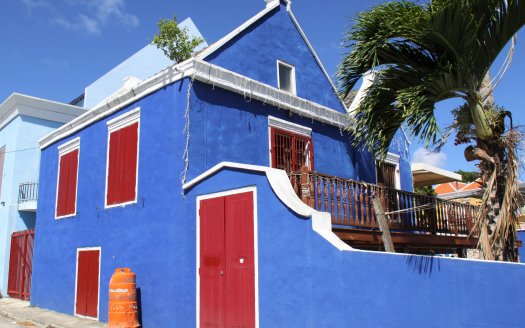
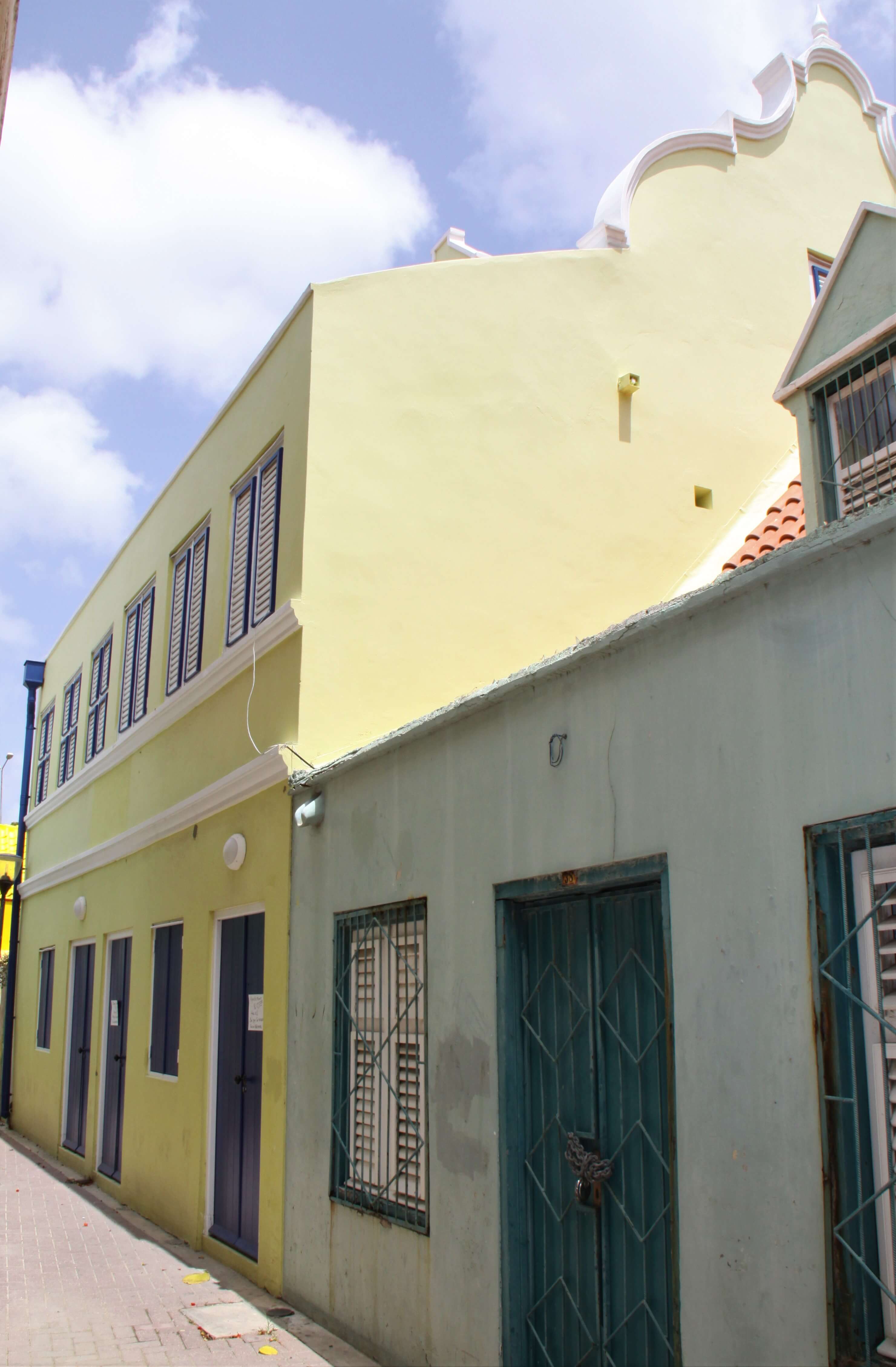
In 2001, N.V. Stadsherstel Willemstad acquired and restored the 18th-century townhouse with its distinctive curved Baroque side façades.
Name of property:
None
Characteristics:
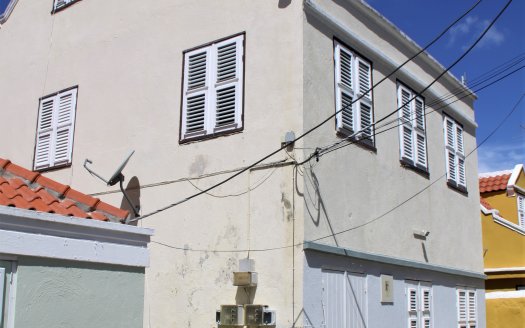
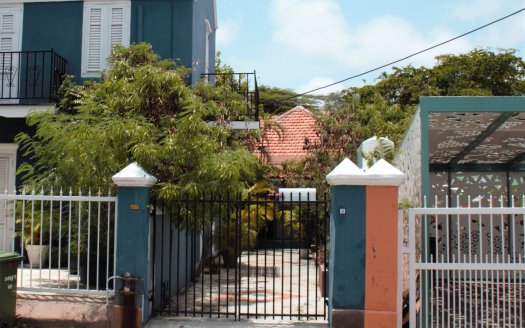
Semi-detached two-and-a-half-story structure. Gable roof over the core area and lean-to roofs over the two-story front and rear gallery. Two dormers on both sides of the roof. Inward and outward curved gables with classical moulding and arched top end. The front façade has six tall shutter windows and full-frontage mouldings.
Monument value:
Architectural historical and esthetical value because of the fine 18th-century gables and full-frontage mouldings. Architectural historical and cultural-historical value because of the floor plan typical of Curaçao. Specific value as part of a protected monumental townscape.
Construction period:
18th Century
REGISTER OF LISTED HERITAGE
READ MORE